
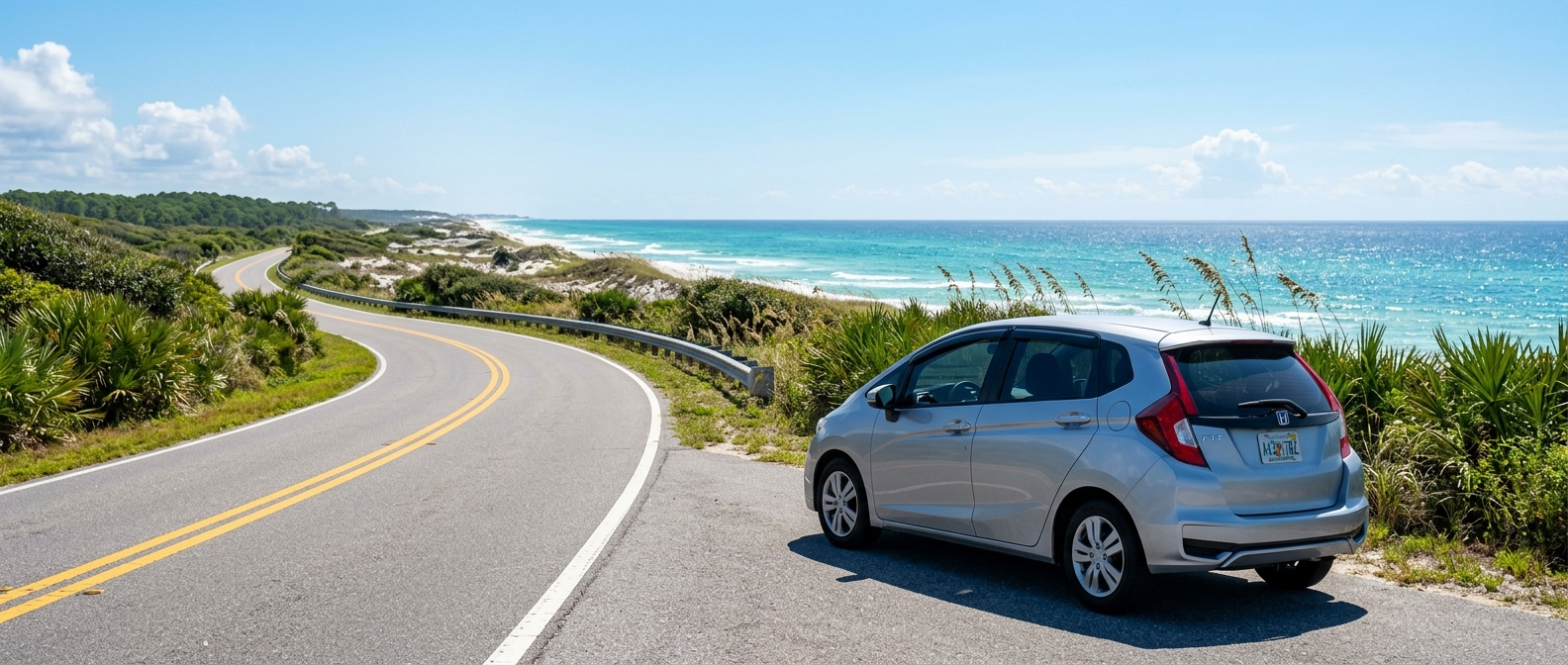
If you make this drive, you already know the Cape San Blas stretch. You hop on US-98 out of Panama City, roll through Port St. Joe, and by the time the road narrows down to the peninsula you've covered almost sixty miles of two-lane highway baking in Florida September heat. Do that round-trip twice a week in a car you bought because it was cheap, and you'll find out fast whether cheap was actually a bargain or just a delay on a bigger repair bill.
Browse our pre-owned inventory at Bay Cars and you'll see why we think the model matters more than the sticker. The way this tends to get described is simple, something like "I just need something reliable for around here." Once you unpack that, it means you need good fuel economy for a 100-plus-mile round-trip, an A/C system that doesn't quit in Gulf Coast humidity, and a used car whose undercarriage isn't quietly losing a battle with salt air. Those are specific demands. Generic "best used car" lists don't address them.
What's Actually Going On With That Drive?
The Cape San Blas run looks easy on a map, and in stretches it genuinely is, but it earns its keep in the details, since US-98 mixes stoplights, beach traffic, and slow-moving trucks with sustained two-lane miles that a straight interstate cruise never throws at you. None of that reads as dramatic on any single trip. It adds up, though, and here's what the drive actually asks of a car.
| What the Drive Demands | Why It Matters | The Coastal Wrinkle |
|---|---|---|
| Steady fuel economy | 100+ mile round-trip adds up fast at the pump | None specifically; efficiency is efficiency |
| Reliable A/C | September Gulf Coast temperatures regularly exceed 90 degrees Fahrenheit | High humidity forces the system to work harder |
| Solid cooling system | Stop-and-go traffic in heat stresses radiators | Coolant levels and hoses deserve extra scrutiny on used purchases |
| Undercarriage integrity | Salt air accelerates corrosion on brake lines, fuel lines, and suspension mounts | A car from a northern state may carry pre-existing road-salt damage |
| Highway-capable engine | Sustained 65 mph stretches between towns | Avoid anything with a documented timing chain or CVT weakness at higher mileage |
The two variables that trip buyers up are the A/C and the undercarriage. A used car that's been sitting near the water, or one that came down to Florida from the Midwest already carrying road-salt damage, can look clean from the outside and hide compromised brake lines or suspension hardware underneath. Salt in coastal air deposits sodium chloride on unprotected metal surfaces and accelerates corrosion. The damage builds slowly rather than all at once. That's why buyers miss it.
The Most Likely Culprit When a Budget Used Car Lets You Down
The culprit is almost never the engine itself, and that catches people off guard, because compact sedans and small hatchbacks from the 2017-2021 model-year range are well past their early production quirks, and the major Japanese and Korean brands in that window carry proven track records. The failure points on a budget used car in a coastal market come down to deferred maintenance and corrosion.
Specifically, a used car owned by someone who skipped oil changes, ran low on coolant, or ignored a weeping hose is a different animal than one with documented service records. On top of that, vehicles that came down from Georgia, the Carolinas, or points further north carry whatever road-salt abuse piled up over several winters. Those brake and fuel lines are steel, they carry pressurized fluid, and according to coastal auto mechanics, failure is sudden rather than gradual.
For the models we actually see come through, here's how a couple of them stack up on this drive. We carry the Kia Soul on our lot, and it's a genuinely strong pick for this use case. The 2019-2021 Soul with the 2.0-liter four-cylinder is EPA-rated at 27 city / 33 highway mpg, and that efficiency matters on a US-98 round-trip. The boxy roofline gives you headroom and cargo room that punch above the price point, and the powertrain in that generation has a clean reliability record. Now the drawback, no sugar-coating. The Soul's ride is firmer than some buyers expect. The base trim's interior is basic. On the Cape San Blas road itself (a two-lane that's smooth enough) you'll live with it fine. You'll feel it on rough patches.
The other model worth serious attention is the Toyota C-HR (2018-2020). The EPA rates the C-HR's 2.0-liter four-cylinder at 27 city / 31 highway mpg. Its styling is sharper, and Toyota's reliability reputation in that segment is well-established. Here the tradeoff is worth naming. The C-HR has no conventional spare tire compartment in those model years, which means a tow can take a while if you're running down a peninsula. Carry a quality repair kit and know that going in.
For buyers who want more interior space and can trade a little fuel economy, the Nissan Rogue Sport (2017-2020) is a reasonable option. The CVT transmission drew some early complaints in the first-generation Rogue Sport, so on any used example your pre-purchase inspection should include a transmission fluid check and a test drive with a sustained highway stretch. At lower mileage with good service history, it's fine. Past 80,000 miles, give it extra scrutiny.
DIY Inspection vs. Letting Our Team Take a Look
You can handle a good chunk of this inspection yourself before you buy anywhere, and you should, but a few of these checks still reward a second set of eyes on a lift, so treat the DIY pass as your first filter and a professional look as the confirmation. Crouch down at the back of the car and look forward along the undercarriage with a flashlight. Light orange surface dusting on the frame is normal in a coastal environment. Thick, scaly, flaking rust on brake lines or suspension mounts is a different story. Check the door jambs, the wheel wells, and the lower body seams for bubbling paint. That bubbling is salt getting under the clear coat and creeping toward bare metal.
The cooling system check is simple too. On a cold engine only, pull the coolant reservoir cap and look for a brown sludgy ring (that's oil mixing with coolant, a head gasket conversation you don't want). Hoses should be pliable, not cracked or stiff. Run the A/C for five full minutes before you decide anything. If it takes a long time to get cold or blows slightly warm, budget for a recharge at minimum and possibly a more serious refrigerant leak.
Our financing center can help you get into the right car without overextending your budget. Our take, plainly stated, is that a used compact bought with a clean inspection and a solid service record is almost always more car than one bought purely on a low asking figure. The Cape San Blas run is real miles. It'll tell on a neglected car faster than you'd like.
Whatever model you land on, get a pre-purchase inspection done by a mechanic before you finalize anything, whether you buy from us or anywhere else. We'll show you the undercarriage in person, because we'd rather you buy with eyes open than field a question about the car six weeks later.
See our current vehicle specials for what's on the lot right now.
Frequently Asked Questions
What's the most important thing to check on a budget used car before driving to Cape San Blas?
The undercarriage. Specifically, look at the brake lines, fuel lines, and suspension mounts for thick, flaking rust rather than just light surface oxidation. Gulf Coast salt air deposits sodium chloride on exposed metal surfaces and accelerates corrosion, so a used car that looks clean from the outside can have serious structural issues underneath.
Is the Kia Soul a good choice for the US-98 / Cape San Blas commute?
It's a strong fit for most buyers. The 2019-2021 Kia Soul with the standard 2.0-liter four-cylinder is EPA-rated at 27 city / 33 highway mpg, which keeps fuel costs reasonable on a 100-plus-mile round-trip. The powertrain has a clean reliability record in that generation.
What should I look for when inspecting a used car's cooling system?
Cold engine only, pull the coolant reservoir cap and look for a brown sludgy ring (that's oil mixing with coolant, a sign of head gasket trouble). Hoses should be pliable, not cracked or stiff. Run the A/C for five full minutes and note how long it takes to get cold.