
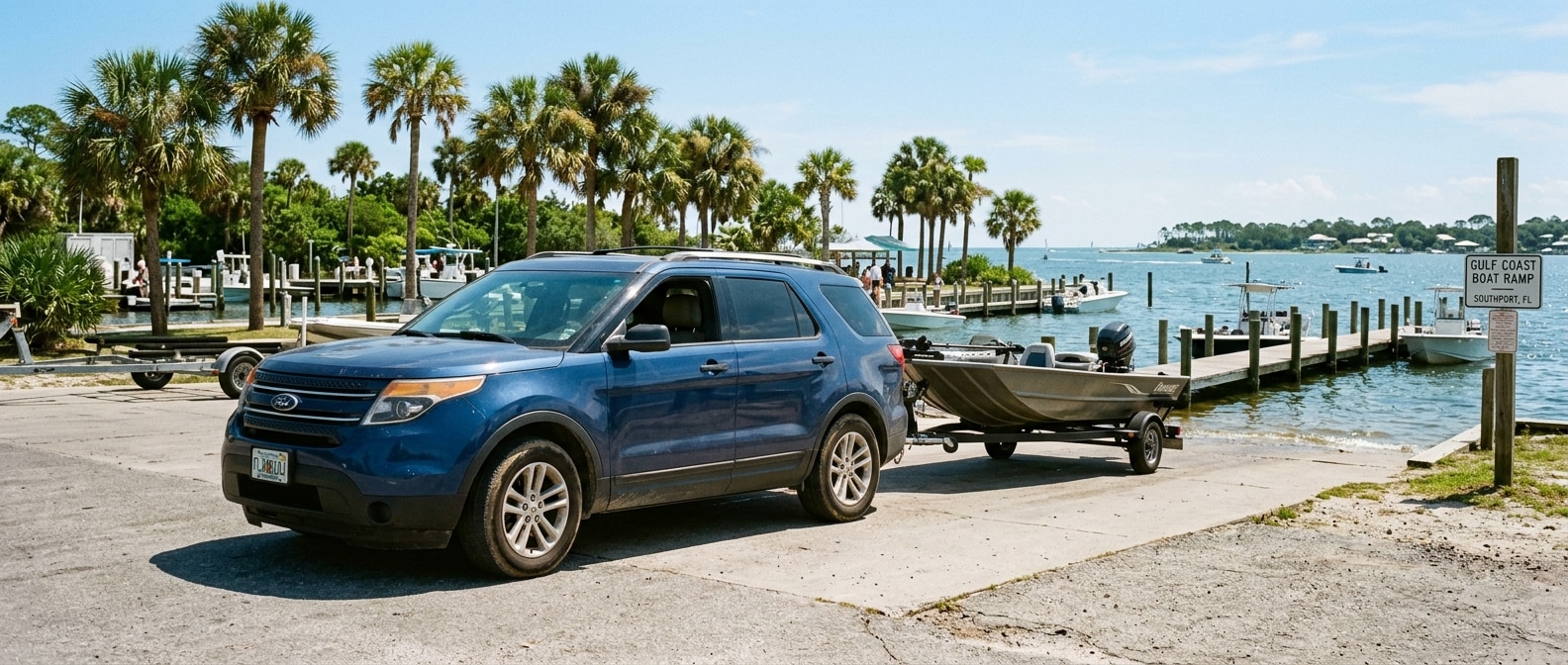
Buy a used Ford Explorer and the badge stays constant, but you're really shopping across at least two very different vehicles depending on which year you land on. The fifth-generation Explorer (2011-2019) is a unibody crossover with a history that varies wildly by year. The sixth generation (2020 and up) is a rear-wheel-drive-based platform that launched rough in year one and then improved a lot after that. Get the year right and you've got a practical, three-row SUV that handles US-98 road trips and a full family load without drama. Get it wrong and you inherit someone else's powertrain headaches.
Browse our current used Ford Explorer inventory at Bay Cars to see what's on the lot right now.
- Sweet spot for value and reliability: 2017-2019 (late fifth gen) and 2022-2023 (settled sixth gen)
- Budget entry with homework required: 2020, but only after confirming all NHTSA recall campaigns are closed on the specific VIN
- Years to approach carefully: 2011-2013 (early fifth gen complaint volume) and 2020 (28 recall campaigns at launch, per NHTSA data)
- The sixth generation switched to rear-wheel drive as its base layout (a real handling difference Panhandle families should understand before buying)
- Always run the VIN: the 2011-2019 A-pillar trim recall (NHTSA 24V031) covers roughly 1.9 million vehicles and may still be open on any specific unit
Which Explorer years are the sweet spot for used buyers?
Two windows stand out when you lay the NHTSA complaint data next to owner feedback, the 2017-2019 stretch in the fifth generation and the 2022-2023 stretch in the sixth, and each one carries a different price point and a different character, so which one fits you comes down to what you're actually doing with the vehicle.
| Year Range | Generation | What Makes It a Sweet Spot | Watch For |
|---|---|---|---|
| 2017-2019 | 5th gen (unibody) | Ford resolved early electrical and powertrain complaints; 2019 especially clean record | A-pillar trim recall (NHTSA 24V031). Confirm it's been completed on your VIN |
| 2020 | 6th gen launch | Lowest entry point on the new platform; RWD-based handling | 28 NHTSA recall campaigns at launch; PCM reset recall (NHTSA 23V069) on 2.3L with 10-speed; confirm every campaign closed |
| 2021 | 6th gen | Standard Ford Co-Pilot360 safety suite; SYNC 4 infotainment | 22 NHTSA recalls on file; rear axle mounting bolt recall (confirm completed) |
| 2022-2023 | 6th gen (settled) | Substantially lower complaint rate vs. 2020-2021; 2023 draws only 12 NHTSA recalls | Still confirm the rear axle bolt recall (2020-2022 vehicles) and the transmission park gear bolt recall |
The 2017-2019 window is the right call if your budget puts you in the older-model range and you want a thoroughly sorted platform. Ford had more than six years of fifth-gen production behind those trucks, and it shows in the complaint trajectory. The 2019 in particular lands at the convergence of cleaner A/C and electrical history with the updated interior refresh from 2016. For families doing regular runs from Southport down to St. Andrews State Park with three kids and a cooler in the back, it's a well-understood vehicle.
Reach for the 2022-2023 range if you want the current-gen rear-drive platform with modern safety tech (Ford's Co-Pilot360 suite is standard on the sixth gen, covering automatic emergency braking and blind-spot monitoring) and the launch roughness worked out. Per NHTSA records, the 2023 Explorer has 12 recall campaigns on file compared to 28 for the 2020 model year. The gap there is meaningful, more than double in fact. These are also the years where the original owner may have bought new recently enough that some factory coverage still applies. Ask our team about current coverage options.
Which years should you watch out for?
The years to approach with the most caution are the early fifth generation (2011-2013) and the sixth-gen launch year (2020), and the reasons differ, one is a matter of accumulated complaint volume and the other a matter of first-year recall count, so both reward a careful VIN check before you sign anything. Start with the early fifth generation. The 2011-2013 Explorer moved to a unibody crossover platform and brought fresh problems with it, electrical complaints, powertrain concerns, and a steering-related complaint cluster that shows up across NHTSA's records on the 2011, 2013, 2014, 2015, 2016, and 2017 model years. Per NHTSA complaint data (as of August 2026), the 2016 Explorer ranks among the highest severity-weighted complaint rates in the model's history, with steering as the leading issue category. The 2013 logged 2,717 owner complaints in NHTSA's system (the second-highest single-year total across the model's entire history).
The 2020 deserves its own conversation because the headline number is hard to ignore. Check our full pre-owned inventory for currently available Explorers. The 2020 launched the sixth-generation rear-wheel-drive platform with genuine promise but arrived with first-year quality problems concentrated in powertrain and electronics. NHTSA data shows 28 recall campaigns for the 2020 model year alone. The specific issues worth knowing come down to three:
- PCM reset recall (NHTSA 23V069): Affects 2020-2022 Explorers with the 2.3L engine and 10-speed 10R60 automatic. An unintentional powertrain control module reset while driving can damage the park system. Confirm this campaign is closed on any VIN you're considering.
- Rear axle mounting bolt recall: Covers 2020-2022 Explorers. Per NHTSA, the bolt can fracture, which can cut drive power or allow the vehicle to roll when parked without the brake set. This one matters. Ask for documentation that the remedy was completed.
- A-pillar exterior trim recall (NHTSA 24V031): Covers approximately 1.9 million 2011-2019 Explorers. The trim retention clips may not be properly engaged, allowing the trim to detach and create a road hazard. Because this campaign is recent (admitted in 2024 for a structural issue dating back years), there's a real chance units on private lots have never been remedied. Our financing center can help you structure the right deal once you've confirmed your VIN is clean.
There's also an older concern worth naming for anyone considering a pre-2018 fifth-gen unit, a technical service bulletin pattern covering 2011-2017 Explorers related to exhaust odor entering the cabin. This isn't a minor irritant. Carbon monoxide intrusion was the specific issue Ford addressed through those TSBs. On any 2011-2017 vehicle, ask the seller for documentation confirming the relevant service work was completed. We flag this not to alarm anyone but because it's the kind of thing a used-car walk-around won't surface on its own.
Check Your Financing Options at Bay Cars
What the data says about the salt-air factor for Bay County buyers
Salt air is the one variable the national buying guides leave out, and it genuinely shifts the calculus when you're shopping around Southport or anywhere along the Panhandle coast, because Gulf Coast air accelerates corrosion on exposed suspension components, undercarriage hardware, and electrical connectors faster than it does on inland vehicles of the same mileage.
None of that is alarmist. It's just chemistry.
What it means in practice is straightforward enough. A 2018 Explorer with documented service history from a dry-climate state is a different proposition than the same year and mileage with five years of Bay County exposure. Work through these on any used Explorer you're seriously considering:
- Inspect the undercarriage. Look at suspension arms, brake lines, and subframe mounting points for surface rust that's progressed past surface-level.
- Check electrical connectors in the engine bay and under the dashboard. Corrosion at connector pins is a coastal-specific failure mode that doesn't always show up in complaint databases because owners often chalk it up to "electrical gremlins."
- Ask about tire and cooling system service history. Our area's summer heat (routinely into the low-to-mid 90s from June through September) speeds up rubber degradation and puts a consistent thermal load on cooling systems. An Explorer that spent its first few years in a cooler state and came south recently is measurably different from one that's lived here its whole life.
- Pull the CARFAX or AutoCheck and look at registration history. A clean-history Florida vehicle is fine. The point is to know what you have before you buy it, not after.
None of this makes a Gulf Coast Explorer a bad buy. We see plenty of well-maintained examples that have lived here for years and are completely solid. It just means the inspection step matters more here than in Phoenix.
Which year is right for which buyer around Southport?
The right year depends less on the calendar and more on the job you're handing the Explorer, so a family hauler, a budget buyer, and someone chasing modern features without the newest-gen price will each land on a different answer, and the four profiles below sort out which window fits which use.
The three-row family hauler (road trips, school pickups, soccer weekends): Target the 2021-2023 range. You get Ford Co-Pilot360 standard on the sixth-gen platform (automatic emergency braking, lane-keeping assist, blind-spot monitoring), plus the second-row availability in captain's chairs or bench depending on the trim. The 2022-2023 years have the lowest complaint density of any sixth-gen model. If you're doing regular Gulf Coast highway miles on US-98 or I-10, you want the modern active safety package. These years have it standard.
The budget-conscious buyer: The 2017-2019 fifth gen is your target. The platform is mature and well-understood at this point. You're giving up some of the latest safety tech (Co-Pilot360 wasn't standard until the sixth gen) but landing on a vehicle with a substantially cleaner complaint record than the 2011-2016 years. The 2019 stands out. Just confirm the A-pillar trim recall (NHTSA 24V031) is completed. It covers all 2011-2019 units, and a fair number haven't been touched yet.
The buyer who wants modern features without the newest-gen price: The 2021 Explorer is worth a close look. It has the sixth-gen platform, SYNC 4, and Co-Pilot360, and it's had more time to depreciate than a 2023. The tradeoff is a higher recall count than the 2022-2023 (22 campaigns per NHTSA data), so the VIN check is non-negotiable before you commit. Confirm the rear axle bolt and PCM reset recalls are both closed.
The buyer considering the ST or Platinum trim: Both are sixth-gen trims and the same year logic applies. For these higher-trim configurations, 2022 or 2023 are the cleanest years. The ST's 3.0L EcoBoost V6 is a seriously fast engine (400 horsepower per Ford's specifications for the current 2026 generation), and the platform behavior at highway speeds is a good deal more composed than the fifth gen. Just know that the V6 carries different recall exposure than the 2.3L four-cylinder. They're different powertrains on the same platform.
One caveat here deserves saying plainly, because the Explorer has never been the reliability star of the three-row SUV segment. In the right years it's a capable, spacious, genuinely pleasant vehicle to drive. But it sits around average in its class on reliability metrics, not at the top. If rock-solid reliability is the single overriding priority, that's worth knowing going in. The right Explorer year, bought with the right inspection and recall verification, is a solid pick for Bay County families. The wrong year, bought on looks and mileage alone, is how you end up at a shop you didn't plan on visiting.
If you need more room, our used Ford Expedition inventory is worth a look for buyers who want the same platform logic in a larger full-size three-row.
Frequently Asked Questions
What are the best years to buy a used Ford Explorer?
The 2017-2019 and 2022-2023 model years are the two windows the Bay Cars team watches most closely. In the fifth generation, 2019 stands out for its relatively clean NHTSA complaint record and updated interior. In the sixth generation, 2022 and 2023 show the lowest recall and complaint density: the 2023 carries 12 NHTSA recall campaigns compared to 28 for the 2020 launch year.
Is the 2020 Ford Explorer reliable enough to buy used?
The 2020 is the lowest-entry-point on the sixth-gen platform, but it launched with 28 NHTSA recall campaigns (the highest single-year count in the model's sixth-generation history). The two campaigns that matter most are the PCM reset recall (NHTSA 23V069, affecting the 2.3L engine with the 10-speed automatic) and the rear axle mounting bolt recall. Run the VIN at nhtsa.gov before you make any offer.
What should I inspect on a used Explorer being sold in the Panama City area?
Beyond the standard pre-purchase inspection, Gulf Coast buyers should pay particular attention to undercarriage corrosion on suspension components and brake hardware (salt air accelerates this compared to inland vehicles), electrical connector integrity in the engine bay, and cooling system service history. On any 2011-2019 unit, also confirm the A-pillar exterior trim recall (NHTSA 24V031, covering approximately 1.9 million vehicles) has been completed on the specific VIN.