
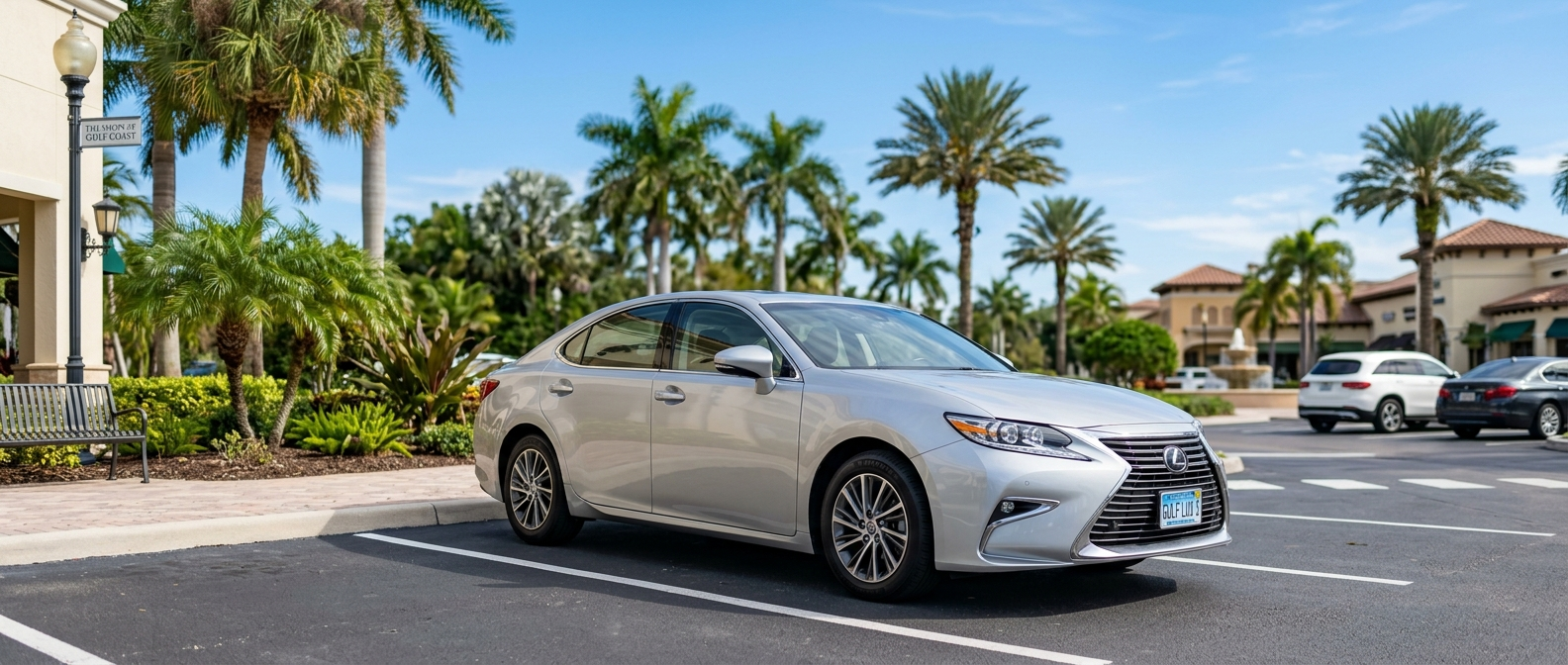
You've been hauling two-by-fours and bags of concrete in your truck, and somewhere between the Lowe's on East 23rd Street and the Home Depot a block away, you made a call. The next vehicle is going to be comfortable, maybe even quiet. A used Lexus ES 350 keeps landing on your shortlist, and that's a smart instinct. Below is the straight version of how to land a good one without paying for someone else's mistakes.
Browse the ES 350s on our lot to see what's available before you commit to any of the steps below.
What You Need Before You Start
Don't walk onto any lot (ours included) until this prep work is done. It takes an hour, and it saves you a world of grief.
| Item | Why It Matters |
|---|---|
| VIN or plate number | Pulls the full title and accident history |
| NHTSA recall lookup (nhtsa.gov) | Confirms any open safety campaigns on that specific car |
| Service-interval knowledge | ES 350 V6 water pump can fail near 100,000 miles; you need to know where the car is |
| A flashlight | Dashboard condition check for pre-2013 models (more on this below) |
| A test-drive route with at least one highway on-ramp | The 3.5L V6 should pull cleanly and settle into a near-silent cruise |
| Budget for a pre-purchase inspection | A local mechanic charges flat-rate labor; skip this and you're guessing |
How to Shop a Used ES 350 Step by Step
When the Bay Cars team evaluates a used ES 350, we work through a set procedure internally. We're sharing it because a buyer who knows what to look for ends up happier with the car.
Step 1: Lock In Your Target Year Range First
Picking your year range is the single most important decision you'll make, and you won't make it in person. You'll make it at your kitchen table with NHTSA's data in front of you.
According to NHTSA's owner complaint database (data as of October 2026, analyzed across 1,128 filings), several early model years each carry an "avoid" classification:
- The 2008, 2009, 2010, and 2011 model years all fall into the "avoid" tier.
- The 2008 alone logged 323 complaints, while the 2009 through 2011 models came in between 173 and 197.
- They aren't just high in absolute terms; the severity weighting that accounts for crashes, fires, and safety-critical failures makes them stand out against the rest of the ES 350's own history.
The 2014 through 2017 models tell a different story entirely. In that same dataset, those years ran just 16 to 28 complaints each, with a single recall campaign per year.
A 2012 sits in a middle "caution" tier (116 complaints, three recalls) and can be a solid buy with careful inspection. By 2013 the car earns a "solid" classification.
If you're eyeing something from 2019 or newer, the complaints effectively disappear from the federal database. Encouraging, though those cars will carry a higher asking price.
See our full used inventory and filter by year before you come in. It narrows your visit considerably.
Step 2: Understand What Generations You're Looking At
The ES 350 has two generations relevant to used shoppers in Panama City right now.
The fifth-generation (model years 2007-2012) runs a 3.5L V6 rated at 268 horsepower, paired to a six-speed automatic, and the EPA rates fuel economy for those years at around 19 city and 27-28 highway. You also get the most documented dashboard-melting concerns here (heat-softened surface material on pre-2013 models is a real thing in Florida's climate, not an exaggeration) and the highest NHTSA complaint volumes. A 2010 or 2011 with a fresh inspection and confirmed recall completion can still be a reliable buy, but go in with your eyes open.
The sixth-generation (model years 2013-2018) is where the car matured. Its platform grew, the interior quality improved, and the complaint volumes dropped sharply. In 2013 Lexus also introduced the Remote Touch controller for infotainment, which real-world ES owners consistently call awkward. Test it yourself before you commit. By this era the 2024 EPA rating for the 3.5L V6 lands at 22 city / 32 highway. For a full-size luxury sedan, that's genuinely solid fuel economy, better than you'd guess.
Compare the Cadillac CT4 if you're open to a sportier alternative in the same luxury-value segment.
Step 3: Pull the NHTSA Recall Report for That VIN
Pulling the recall report costs nothing and takes about two minutes on nhtsa.gov. It matters because some ES 350 models had significant recall campaigns. NHTSA records show the 2007-2012 models were included in the large Takata airbag inflator recall campaign (NHTSA campaign 16V340000). The 2018 model was included in a fuel pump recall (expanded in early 2020). The 2020-2021 models had a passenger airbag deployment recall filed by Lexus in late 2023.
Per NHTSA, "an air bag that does not deploy during a crash increases the risk of injury." Any open campaign on the specific VIN you're looking at needs to be remedied before the car changes hands. Don't skip this one.
Step 4: Inspect the Three Physical Points That Matter Most
Do you need to be a mechanic for this? No. You just need to check three things that a general inspection might gloss over on this specific model.
Water pump. The 3.5L V6 engine that powers the ES 350 through its gasoline years has a documented pattern of water pump failures around the 100,000-mile mark. Ask for service records. If the car is over 95,000 miles and has no record of water pump service, budget for that job or use it as a negotiating point.
Dashboard surface. On fifth-generation cars (2007-2012), open the driver's door and press your thumb lightly against the top of the dashboard in a shaded spot. A degraded surface will feel slightly tacky. Panama City gets real heat from June through September, and a car that spent its life baking in a Bay County parking lot may have accelerated this issue.
Transmission behavior. The six-speed automatic in the fifth-generation and the eight-speed in the seventh-generation (2019+) should both shift without any hesitation, clunk, or searching. On a highway on-ramp, the car should downshift cleanly when you press the accelerator. Any stumble is worth flagging. It won't necessarily kill the deal, but you'll want to raise it.
Step 5: Drive the East 23rd Street Route
Obvious as it sounds, hear us out. The Home Depot and Lowe's sit practically side by side on East 23rd Street in Panama City. The corridor, and the US-98 stretch heading toward the Gulf, is where this car is going to spend most of its life. Expect stop-and-go on weekends, occasional highway bursts, and Florida heat baking the cabin when you park.
Take the test drive that reflects real Panama City driving. Start cold. Drive through at least one stretch of 23rd Street traffic. Merge onto the highway. Let the A/C run for 10 minutes and make sure it's pulling cold air aggressively (a weak A/C on a Gulf Coast car is a red flag for a refrigerant leak or a compressor starting to wear). Then park, turn off the car, and sit for a few minutes. Restart it. The ES 350 should wake up without any hesitation or rough idle.
See the Lincoln Nautilus if you want a crossover in the same comfort-first category.
Step 6: Run the Pre-Purchase Inspection Off-Lot
Running an off-lot inspection is non-negotiable, and any straight-shooting used car dealer will tell you the same thing. Take the car to an independent mechanic before signing anything. A full pre-purchase inspection covers what a test drive and visual check simply can't catch. Think compression, cooling system integrity, brake thickness, suspension wear, and whether those water pump records match the actual condition of the components.
A solid ES 350 in the 2014-2017 range will pass this inspection with flying colors, because these cars are genuinely well-built. A car that fails deserves to fail, and you'll be grateful you spent the money on the inspection rather than the repair.
Your Print-and-Go Checklist
Take this list with you. Running through it in person beats scrolling a guide.
- [ ] Target model year confirmed: 2014-2017 for best NHTSA complaint record, 2013 is solid, 2012 requires close inspection
- [ ] VIN pulled and entered at nhtsa.gov for open recalls
- [ ] Takata airbag recall status confirmed (2007-2012 cars) and fuel pump recall confirmed (2018 cars)
- [ ] Service records reviewed for water pump documentation (critical if over 95,000 miles)
- [ ] Dashboard surface checked for softening or tackiness (fifth-generation cars)
- [ ] Test drive included cold start, 23rd Street stop-and-go, and a highway merge
- [ ] A/C tested for consistent cold output after 10 minutes running
- [ ] Transmission checked for clean, hesitation-free shifts under acceleration
- [ ] Remote Touch infotainment controller tested (sixth-generation, 2013-2018)
- [ ] Pre-purchase inspection scheduled with an independent mechanic before signing
- [ ] Financing options confirmed so you're not negotiating blind
Get financing squared away before you walk onto any lot.
The used ES 350 is one of the better calls in the luxury-value segment if you go in with the right information. It's not perfect (no used car is), but a well-chosen example in the 2014-2017 range carries the kind of verified reliability record that makes the purchase feel a lot less like a gamble. And that's the goal. You've already done your homework at the home improvement stores, so do the same here, same discipline.
By the Bay Cars Team | October 2026
Frequently Asked Questions
What are the best years to buy a used Lexus ES 350?
The 2014 through 2017 model years have the strongest reliability record based on NHTSA's severity-weighted complaint data (as of October 2026). Each of those years logged just 16 to 28 owner complaints with a single recall campaign. The 2013 model year is classified "solid" in the same dataset. For a more budget-friendly older option, a 2012 with a clean inspection history is worth considering, though it sits in a "caution" tier with 116 complaints and three recalls.
Which Lexus ES 350 years should I avoid?
NHTSA's owner complaint database, covering 1,128 filings, classifies the 2008, 2009, 2010, and 2011 model years each as "avoid." The 2008 model logged 323 complaints alone. Each of those years also carried five recall campaigns. The 2007 model deserves careful handling given the Takata airbag recall history and documented early-generation concerns.