
Two SUVs can share the same nameplate and the same mileage and still be very different buys, and what separates them is the model year, which you won't spot on the window sticker. One year might carry a documented rollaway risk that a recall later fixed. Another carries a fire-risk recall tied only to its plug-in hybrid variant. For families running up and down US-98 with the A/C hammered all summer, those distinctions matter a lot.
Which year should you actually target? The answer changes by model, so we put this guide together for Panama City and Bay County buyers and we'll walk it through one nameplate at a time. We keep several of these models on our lot, and it's a fair thing to ask before you sign anything.
- Honda Odyssey: Target 2021-2023. Skip 2018-2019 without verified recall completion (rod bearing and TCU issues per NHTSA).
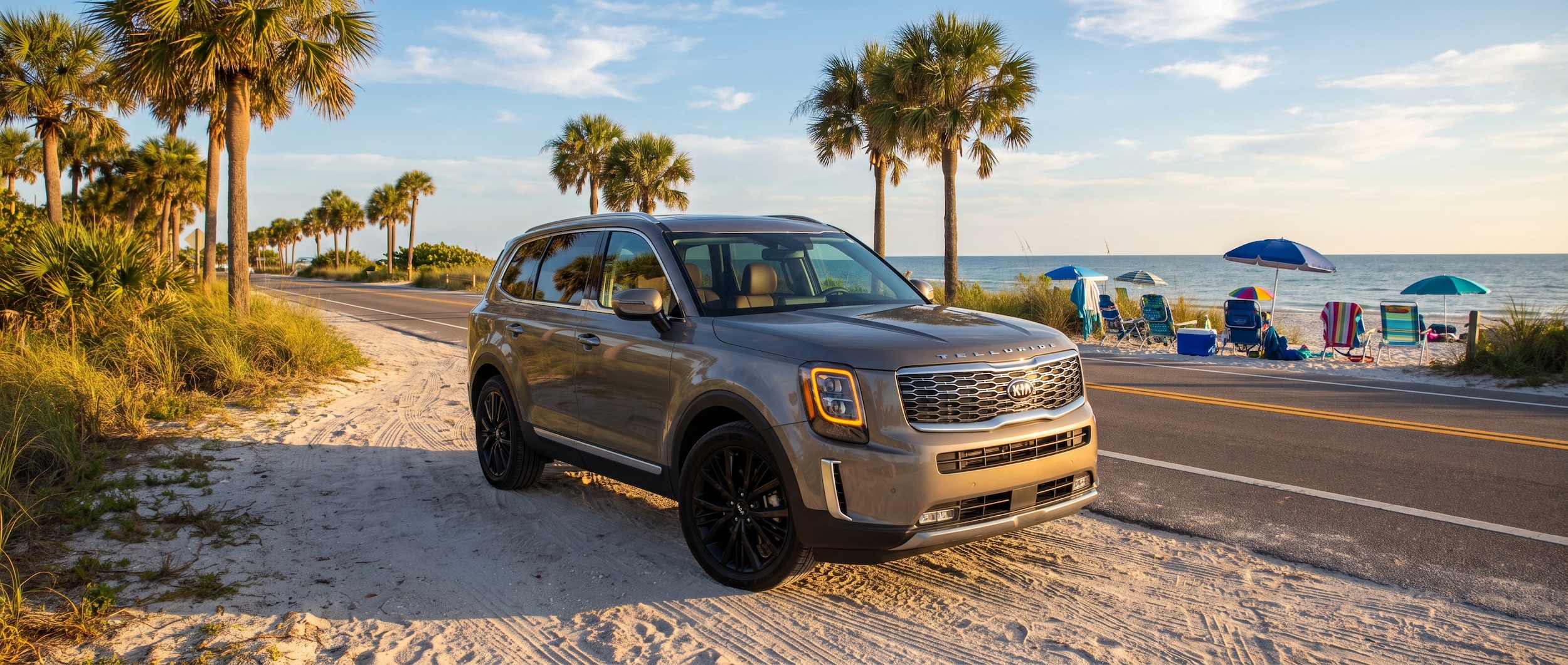
- Kia Telluride: Target 2022-2023. The 2020 had 667 NHTSA owner complaints in its first generation; 2022 is where reliability meaningfully improved.
- Ford Explorer: Target 2018-2019 (fifth-gen, pre-launch-year quirks resolved) or 2022-2024. Be cautious with 2020-2021 (multiple driveshaft rollaway recalls per NHTSA).
- Chrysler Pacifica: Target 2021-2022 gas models only. Steer clear of the PHEV variants from 2017-2021 (documented fire risk per NHTSA recall 22V-077 and its expansions).
- For any year you're considering, run the VIN on the NHTSA recall lookup before you buy.
Which Model Years Are the Sweet Spot?
Four family vehicles anchor this guide, and for each one there's a band of model years worth targeting and a band worth extra scrutiny, all of it drawn from NHTSA recall data and documented complaint patterns rather than nameplate reputation alone. All four are family haulers we stock at Bay Cars. Nameplate and mileage won't tell you which is which.
| Model | Sweet-Spot Years | Years to Watch | Key Reason |
|---|---|---|---|
| Honda Odyssey | 2021-2023 | 2018-2019 | Rod bearing wear recall (NHTSA 23V751) on 2018-2019; 2021+ resolved main issues |
| Kia Telluride | 2022-2023 | 2020 | 667 NHTSA owner complaints on 2020; 2022 saw the most meaningful reliability improvement |
| Ford Explorer | 2018-2019, 2022-2024 | 2020-2021 | Multiple driveshaft/PCM rollaway recalls (NHTSA 20V693, 23V069) on 2020-2022 |
| Chrysler Pacifica | 2021-2022 (gas) | 2017-2021 PHEV | PHEV fire-risk recall (NHTSA 22V-077 and expansion) across multiple model years |
Which Years Should You Watch Out For?
A caution-year is rarely a flat never-buy, and the difference almost always comes down to the paperwork, because a recall that's been repaired cleanly leaves you a very different vehicle than one with the work still open, so read each year on its own history. The breakdown below pulls from NHTSA data.
Honda Odyssey (2018-2019): NHTSA campaign 23V751 documents a connecting rod bearing wear and seizure issue on 2018-2019 Odysseys (also affecting MDX, Pilot, and Ridgeline with the same 3.5L V6). Separately, 2018-2022 Odysseys fall under a passenger seat weight sensor recall (NHTSA campaign 24V064) where a cracked sensor can cause airbags to deploy unintentionally during a crash. The remedy is a sensor replacement, and it's free at any Honda dealer. In our view, a 2018-2019 Odyssey with documented proof that both recalls were completed is a different animal than one without that paperwork. Don't shortcut that check.
Kia Telluride (2020): NHTSA complaint data shows the 2020 Telluride logged 667 owner complaints in its first generation (more than six times the complaint volume of the 2022). NHTSA also documents a driveshaft rollaway recall covering 2020-2024 Tellurides related to power seat motor overheating. The 2020 was a launch year, and launch years are always where the kinks show up. Browse our used Telluride inventory and ask specifically for 2022 or newer if that's the way you're leaning.
Ford Explorer (2020-2021): The 2020-2021 Explorer is the one we flag most often. NHTSA issued multiple driveshaft and PCM-related rollaway recalls for 2020-2022 Explorers. Those include campaigns 20V693000 (driveshaft fracture along the weld seam) and 23V069000 (PCM reset causing park system damage), and both describe a vehicle rollaway risk. NHTSA describes the remedy as inspecting and repairing the park system, free of charge. A 2018-2019 Explorer (fifth generation, with prior-generation issues resolved) or a 2022-2024 unit with verified recall completion is a meaningfully different buy. We're not saying avoid the Explorer. Verify recall status before you commit.
Chrysler Pacifica PHEV (2017-2021): NHTSA recall 22V-077 (and its subsequent expansions) documents a fire risk in 2017-2021 Pacifica Plug-In Hybrid vehicles where the battery pack can cause a vehicle fire even with the ignition off. That recall was expanded most recently to 2019-2021 PHEV units in March 2025. The gas-powered Pacifica is a separate story. The non-hybrid 2021-2022 models dropped the early transmission complaint patterns that made the 2017 launch year so problematic (documented NHTSA complaint history shows the 2017 Pacifica logged over 1,000 complaints and nine recalls). Stick with a gas Pacifica from 2021 or newer and you're working with a much cleaner reliability picture.
Which Year Fits Which Panhandle Family?
The right used family vehicle really does depend on how you'll use it, whether that's towing a boat, moving the most people you can fit, or wanting an SUV stance instead of a minivan, and each of those priorities points to a different nameplate and a different sweet-spot year. We'd sort it four ways.
You're hauling a boat or beach gear on the regular: The Ford Explorer 2022-2024 gives you enough tow capacity (Ford lists up to 5,600 lbs on properly equipped versions) to pull a small center console or a loaded-down gear trailer, and you still get three-row flexibility for a full family. Just confirm those rollaway recalls are closed before you buy. The 2018-2019 is a solid alternative if you want to stretch your budget further.
You need maximum people-moving space: An Odyssey or Pacifica minivan beats every three-row SUV on interior volume for the money. The 2021-2023 Honda Odyssey hits the sweet spot. The main mechanical recall concerns from the 2018-2019 years are resolved, and the 2021 refresh made Honda Sensing (the full suite of forward collision warning, lane departure alert, and adaptive cruise control) standard across all trims. For families running the stretch of US-98 from Callaway to the beaches with kids and cousins in tow, that's a meaningful safety upgrade over the base 2018-2019 configuration.
You want three rows and an SUV feel, not a minivan: The 2022-2023 Kia Telluride is the move. The 3.8L V6 is proven and smooth, complaint volumes dropped substantially compared to the 2020 launch year, and the 2022 model added Kia's larger infotainment screen and Highway Driving Assist to lower trim levels. You won't find it cheap (Tellurides hold value stubbornly), but if the budget allows, it's the closest thing to a new-car experience in this segment at used-car money. St. Andrews State Park is in Panama City Beach. On a packed summer Saturday there, you'll appreciate having second-row captain's chairs that actually recline.
You're on a tighter budget and need maximum seats: A 2021-2022 gas Pacifica is the honest pick. Skip the PHEV. The gas drivetrain is solid, the nine-speed transmission complaints that plagued the 2017 launch year were largely resolved by 2021, and the Pacifica offers one of the largest cargo volumes in the minivan segment. It won't feel as refined as the Odyssey, but it's a real family hauler at a used price that makes sense.
FAQ:
What's the most reliable used family SUV for the Florida Panhandle?
For the Panhandle specifically, we'd point families toward a 2021-2023 Honda Odyssey or a 2022-2023 Kia Telluride (both offer verified reliability improvements over their respective launch years and come with Honda Sensing or Kia's driver assistance suite as standard). Run the VIN through NHTSA before you buy either one to confirm any open recalls have been resolved.
Is the Chrysler Pacifica Hybrid safe to buy used?
The plug-in hybrid Pacifica carries a documented fire-risk recall (NHTSA 22V-077 and its expansions) covering 2017-2021 PHEV models. A vehicle where that recall was completed by the dealer is a different proposition, but we recommend sticking with the gas-powered Pacifica if you want the simplest used-buying path. The 2021-2022 gas models are where we'd start.
What should I check before buying any used family vehicle in Panama City?
Run the VIN on the NHTSA recall database first. Then, given the Gulf Coast environment, get a pre-purchase inspection that specifically covers underbody corrosion, brake lines, and electrical connectors. Salt air and humidity accelerate issues that wouldn't show up on a vehicle that spent its life farther inland. Service records and a vehicle history report round out the basics.